
How to Choose the Right Hydraulic Hammer
27th Jul, 2026
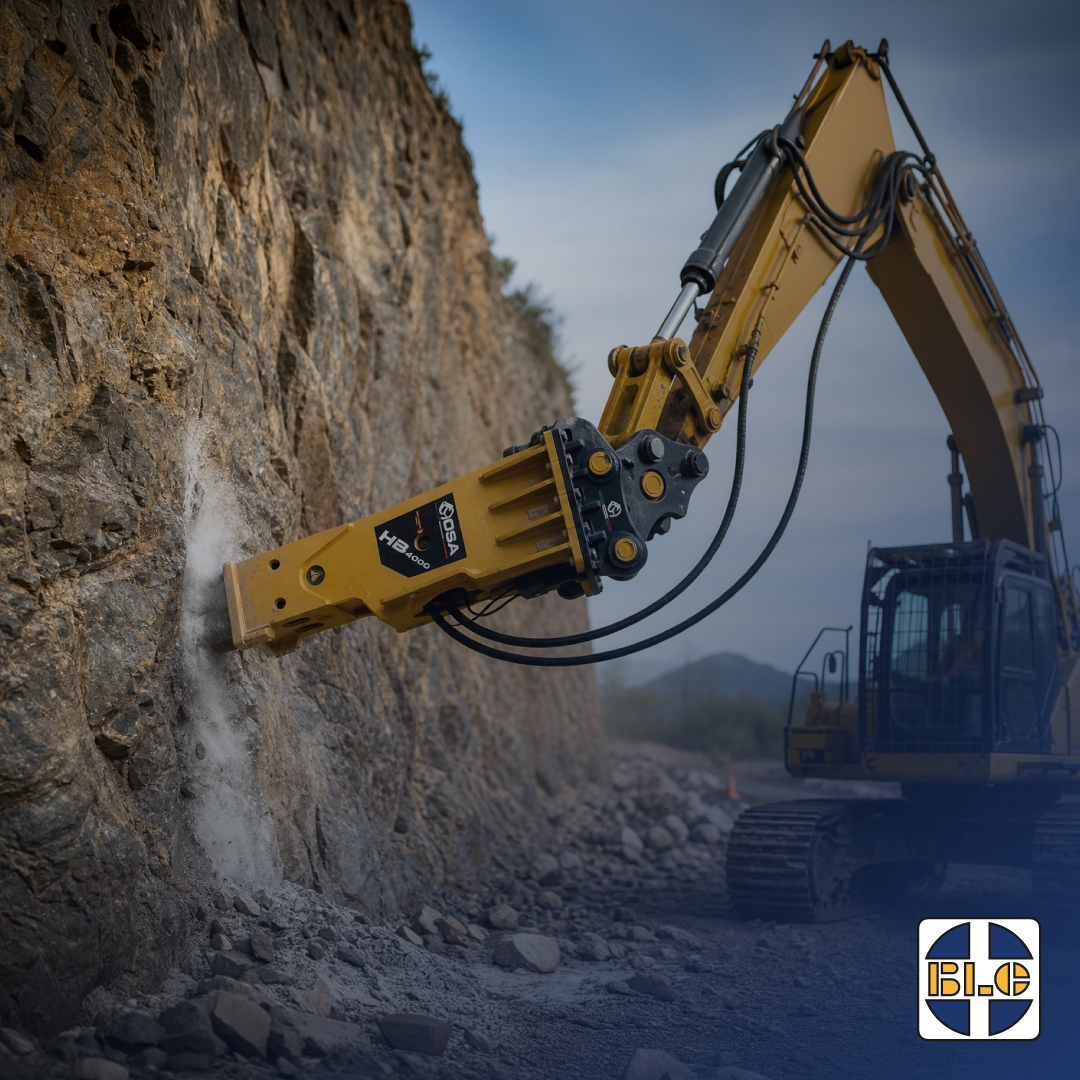
Choosing the right equipment attachments for Demolition, Construction and Mining Work
Hydraulic hammers are used across demolition, construction, quarrying and mining work, but not every hammer is suitable for every site or carrier machine.
A hammer that is too small may slow production and force the attachment to work harder than it should.
A hammer that is too large can place unnecessary strain on the excavator, increase wear and create avoidable maintenance problems.
For many businesses, a hydraulic hammer is not just a once-off attachment. When breaking concrete, trenching, quarrying or rock breaking forms part of regular work, the hammer becomes part of the fleet strategy.
In those cases, choosing the right hydraulic hammer is not only about completing one project. It is about improving availability, protecting the carrier machine and getting better long-term value from the equipment.
At BLC Plant, we work with contractors and operators across construction, demolition, mining and earthmoving applications. From what we see on active sites, the best equipment decisions are made when the attachment, carrier machine, application and support requirements are considered together.
The right decision starts with understanding what the hammer needs to do on site.
A Hydraulic Hammer Should Be Matched to the Job, Not Chosen by Size Alone
One of the most common mistakes when choosing a hydraulic hammer is assuming that the biggest hammer is automatically the best option.
In practice, bigger is not always better.
A hammer that is too large for the carrier machine can affect stability, place stress on the boom and arm, and increase wear on hydraulic components. A hammer that is too small for the material may break slowly, reduce productivity and force the operator to overwork the attachment.
The right hydraulic hammer depends on the job. Breaking reinforced concrete in a demolition environment is different from trenching through hard ground on a construction site. Secondary rock breaking in a quarry is different from removing road surfaces or working around foundations.
This is why the decision should start with the application, not only the price or size of the hammer.
The key questions are:
What material needs to be broken?
How hard or abrasive is that material?
How often will the hammer be used?
What carrier machine will it be fitted to?
Is the hammer needed for one short phase, or will it be used across multiple projects?
What level of support, parts and maintenance will be needed after purchase?
When these questions are answered properly, the hydraulic hammer can be matched to the real conditions of the job.
Start With the Carrier Machine
A hydraulic hammer does not work on its own. It depends on the carrier machine to provide the stability, hydraulic power and control needed to operate correctly.
For most contractors, the carrier will be an excavator. That means the hammer must be matched to the excavator’s operating weight, lifting capacity, hydraulic flow, hydraulic pressure and attachment setup.
If the hammer and carrier are not correctly matched, performance will suffer. The hammer may not hit with enough force, the machine may become unstable, or the hydraulic system may be placed under unnecessary strain.
Carrier Weight and Stability
The carrier must be heavy enough and stable enough to handle the hydraulic hammer safely.
If the hammer is too heavy, the excavator may become unbalanced, especially when working at reach or on uneven ground. This can affect control and increase strain on the machine.
If the hammer is too light for the work, it may not transfer enough impact energy into the material, which slows production.
A properly matched hammer allows the carrier to remain stable while delivering effective breaking performance.
Hydraulic Flow and Pressure
Hydraulic flow and pressure are critical to hammer performance.
The hammer needs the correct flow and pressure to operate within its intended range. Too little flow can reduce impact performance and slow the work down. Too much flow or pressure can cause overheating, unnecessary wear and possible damage to the hammer or carrier hydraulic system.
Before buying a hydraulic hammer for an excavator, the hydraulic specifications of the carrier should be checked carefully. The goal is to make sure the hammer can be powered efficiently without forcing the machine to work outside its limits.
Mounting, Fitment and Compatibility
Mounting and fitment also matter.
The hammer must be compatible with the machine’s bracket, pins, coupler, hoses and auxiliary hydraulic circuit. A hammer may look suitable on paper, but if the fitment is wrong, it can create delays before the attachment even starts working.
For businesses looking to buy a hydraulic hammer, this is where supplier guidance becomes important. The attachment should not only be the right size; it should be ready to work properly with the carrier machine.
Match the Hammer to the Material Being Broken
The material being broken has a major influence on the type of hydraulic hammer required.
Different materials place different demands on the hammer. Reinforced concrete, road surfaces, foundations, trenching material, soft rock, hard rock, oversized boulders and quarry material all behave differently under impact.
A hammer used for light concrete breaking may not be suitable for demanding mining or quarrying work. A hammer selected for hard rock may be too aggressive or unnecessary for lighter construction applications.
The right hammer should deliver enough impact energy to break the material efficiently without damaging the attachment or overloading the carrier. In some cases, blow frequency may also matter. Some work requires faster, repeated impact. Other applications require heavier impact energy for harder materials.
The important point is that the material type should influence the decision from the beginning.
A hydraulic hammer for demolition, for example, may need control and precision when working around structures. A hydraulic breaker for mining may need durability, impact force and support for long operating hours. A rock breaker used in quarrying may need to handle abrasive conditions and repeated heavy-duty work.
When the hammer is matched to the material, the work becomes more consistent, and unnecessary wear is easier to control.
Consider the Type of Work: Demolition, Construction or Mining
Hydraulic hammers are used across several industries, but the same attachment will not always suit every environment. Demolition, construction and mining each place different demands on the equipment.
Hydraulic Hammers for Demolition Work
In demolition work, hydraulic hammers are often used for breaking concrete, removing slabs, reducing structures, working around foundations and handling reinforced material.
Control matters in this environment. The operator may be working in confined spaces, around structures, near other machines or in areas where sequencing is important. If the hammer is poorly matched, it can slow down the demolition process and create unnecessary strain on the excavator.
For demolition contractors who regularly break concrete or structural material, buying the right hydraulic hammer can make practical sense. It gives the business more control over availability and reduces the need to source an attachment at short notice every time a project requires breaking work.
When the hammer becomes part of the regular demolition setup, ownership can support faster mobilisation and better planning.
Hydraulic Hammers for Construction Work
In construction, hydraulic hammers are used for trenching, foundation work, roadworks, site preparation and breaking hard ground or rock.
The right hammer depends on how often this type of work appears in the contractor’s projects. If hard ground or breaking work only appears occasionally, the contractor may still use rental equipment for the larger carrier machine.
However, the hydraulic hammer itself should be treated as an attachment purchase decision when it becomes part of regular work. If the contractor repeatedly needs a hammer across roadworks, civils, trenching or foundation projects, buying starts to become easier to justify.
Buying the right hydraulic hammer allows the contractor to plan around a known attachment and a known carrier machine. This can improve project readiness, especially when timelines are tight and equipment availability affects the start of work.
Hydraulic Hammers for Mining and Quarrying
Mining and quarrying environments place heavy demands on hydraulic hammers.
These applications may include secondary rock breaking, boulder reduction, quarry work and breaking hard or abrasive material. The hammer may be expected to work for long hours in dusty, high-impact conditions.
In these environments, the decision is not only about whether the hammer can break the material. It is also about whether it can keep working consistently with the right maintenance and support behind it.
For mining and quarrying operations where breaking work is ongoing, buying the right hydraulic hammer is often easier to justify. The attachment becomes part of the production cycle. If it is not available when needed, the impact can be felt across the operation.
This is why mining equipment attachments should be selected with productivity, wear, uptime and parts availability in mind from the start.
Maintenance and Support Matters
Buying a hydraulic hammer should not mean the customer is left alone after the purchase.
Hydraulic hammers work under high impact, vibration and pressure. That means maintenance and support are important.
Wear parts, hoses, seals, pins, bushings, retainers and tools all need to be monitored. Lubrication must be managed properly. Hydraulic oil condition also affects performance and component life.
If small issues are ignored, they can become larger failures.
A worn bushing, damaged hose, incorrect lubrication routine or hydraulic problem can quickly affect both the hammer and the carrier machine. In demanding construction, demolition and mining environments, this can result in standing time and lost productivity.
Parts availability is also important. If the right part cannot be sourced quickly, a small repair can turn into a longer delay.
This is where supplier support matters.
BLC Plant supports customers beyond the initial equipment decision through parts and component support, technical knowledge and practical equipment experience. For businesses investing in a hydraulic hammer, this support can help make ownership more manageable.
A hydraulic hammer standing still is not only an attachment problem. It can delay the excavator, the crew and the production schedule. That is why support after purchase should be considered from the start.
Common Mistakes to Avoid When Choosing a Hydraulic Hammer
Choosing a hydraulic hammer without looking at the full application can lead to avoidable problems.
Common mistakes include:
choosing based on price alone
assuming the biggest hammer is the best option
ignoring carrier hydraulic flow and pressure
using a hammer that is too heavy for the excavator
using a hammer that is too small for the material
moving a hammer between machines without checking compatibility
ignoring mounting bracket, pin and hose requirements
overlooking tool selection
failing to plan for maintenance and parts
not considering whether ownership makes more sense when the attachment is used repeatedly
These mistakes usually show up later as poor performance, higher wear, downtime or unnecessary operating costs.
The better approach is to treat the hammer, carrier and application as one system. When the full working environment is considered, the attachment is more likely to perform properly and deliver long-term value.
How BLC Plant Helps Customers Invest in the Right Hydraulic Hammer
At BLC Plant, we help customers look at the full equipment decision before investing in a hydraulic hammer.
That includes the carrier machine, the application, the material being broken, expected utilisation and the support required to keep the attachment working.
For businesses that use hydraulic hammers regularly, buying the right unit can strengthen the fleet and keep the attachment available when the carrier machine is ready to work. The key is to invest in a hammer that is correctly matched to the machine and realistic for the work being done.
BLC Plant’s wider equipment offering includes used construction and mining machinery, OSA Hydraulic Hammers for purchase, plant equipment purchasing and rentals, parts and support. This allows customers to think beyond one attachment and consider how the hammer fits into the wider fleet.
For some businesses, the right decision may be to buy a hydraulic hammer and match it to an existing excavator. For others, the decision may involve reviewing the carrier machine as well. In either case, the goal is the same: choose equipment that works properly on site and can be supported when the job is under pressure.
BLC Plant has built its business around more than a single transaction. With experience across earthmoving equipment, parts, rentals and aftersales support, the team understands that equipment decisions affect productivity, uptime and long-term operating cost.
Final Thoughts
Choosing the right hydraulic hammer for demolition, construction and mining work is about more than selecting an attachment from a list.
The hammer must be matched to the carrier machine, the material, the working environment and the expected utilisation. It must also be supported with the right tools, maintenance planning and parts availability.
Looking to add a hydraulic hammer to your fleet?
Speak to BLC Plant about choosing the right attachment for your carrier machine, site conditions and long-term equipment strategy.