
When to Rent and When to Buy Road Construction Equipment
3rd May, 2026
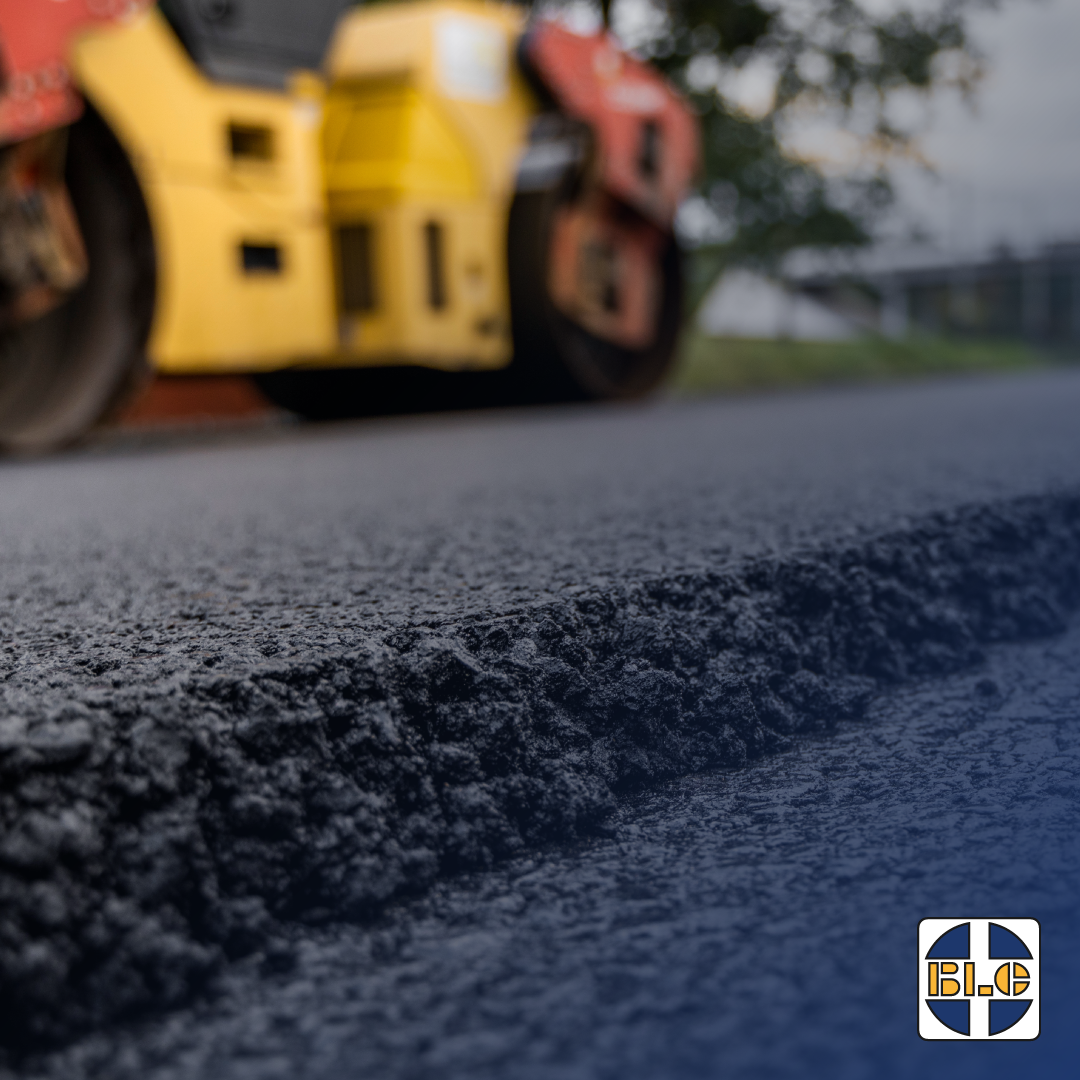
In road construction, the decision to rent or buy equipment is rarely straightforward. It depends on the type of work being done, the stage of the project, how often a machine will be used, and how a contractor prefers to structure their business.
At BLC Plant, we work with contractors across a wide range of projects, and one thing we see often is that equipment decisions are strongest when they are tied to the realities of the jobsite. The question is not simply whether renting is cheaper or buying is better. The real question is: what makes the most sense for this machine, on this project, at this stage, for this business? That is particularly true in road construction, where equipment requirements shift as the project moves from one phase to the next.
Road construction does not require the same equipment from start to finish
One of the biggest mistakes contractors can make is treating road construction equipment as if every machine plays the same role across the full life of a project. In practice, that is rarely the case.
A road project typically moves through several stages. It may begin with clearing and site preparation, then move into bulk earthworks, hauling, shaping, levelling, compaction and finishing. Each stage calls for a different mix of machines, and some machines will stay on site much longer than others. That matters when deciding whether to rent or buy.
A machine that is only needed during a short, high-demand phase may be better rented. A machine that appears on nearly every roadworks contract and stays productive across multiple jobs may be worth buying. At BLC Plant, this is usually where the conversation starts: not with cost alone, but with role and utilisation.
The machine itself often determines the answer
In our experience, the rent-versus-buy decision becomes much clearer when contractors look at the role a machine plays in their operation.
Take a motor grader as an example. For contractors focused on road construction, graders are often central to the work. They are not occasional support machines. They are fundamental to shaping and levelling, and on the right type of contract, they are used repeatedly across projects. In that case, buying can make strong long-term sense, particularly if the contractor has a steady pipeline of roadworks.
A roller, however, may be a different decision. Compaction is obviously critical, but the machine may only be needed intensively during a specific period of the project. For some contractors, especially those with changing site profiles or inconsistent project flow, renting a roller can be more practical than carrying ownership costs between jobs.
The same applies to ADTs. On some road construction projects, articulated dump trucks are essential for moving large volumes of material efficiently, particularly during major earthworks. On others, they may not be needed at all. If a contractor only requires ADTs on selected projects, renting may offer more flexibility. If those machines are in regular demand across a broader contract base, buying starts becoming easier to justify.
At BLC Plant, this is why we do not believe in rent-or-buy. The question should be answered in general terms. It needs to be assessed machine by machine, based on how that machine fits into the contractor’s working model.
When renting road construction equipment makes practical sense
Renting tends to make the most sense when the need is real, but not constant. We often see this where a contractor is taking on a road project with a defined programme and needs additional equipment for a specific stage of the work. Rather than tying up capital in a machine that may only be heavily used for a limited period, renting allows the contractor to bring in the equipment, complete that phase efficiently, and then release it when it is no longer needed.
This is especially relevant in road construction because project demand is rarely uniform. A contractor may need strong haulage support at the earthworks stage, compaction equipment later, and then a different machine mix again as the project moves toward finishing. Renting helps businesses stay flexible as site requirements change.
It can also be the right choice when a contractor wants to protect cash flow. Road construction ties up capital in many areas at once, including labour, fuel, transport, mobilisation and day-to-day site operations. In that environment, not every business wants to commit large amounts of capital to ownership, particularly if machine usage is still uncertain.
At BLC Plant, our rental offering supports contractors who need that flexibility. In many cases, renting is not about avoiding commitment. It is about matching equipment access to the rhythm of the project.
When buying road construction equipment makes practical sense
Buying becomes more attractive when a machine is consistently productive and clearly part of the contractor’s core fleet.
For established roadworks contractors, there are certain machines that are used so regularly that ownership offers better long-term value. If the machine is needed across multiple projects, if utilisation is high, and if the business has the operational structure to support it, then buying can improve control and reduce long-term reliance on rental availability.
This is often the case where contractors have a steady contract pipeline or specialise in particular types of civil and road construction work. In that environment, owning the right equipment can help with planning, scheduling and mobilisation. The machine is available when it is needed, rather than depending on what can be sourced at short notice.
Buying can also make more sense once repeated rental spend starts to outweigh the value of ownership. We have had many conversations at BLC Plant with customers who initially rented a machine for practical reasons, but over time realised that the same equipment was appearing one project after another. At that point, the discussion shifts. The machine is no longer filling a temporary gap. It has become part of the business’s ongoing operational requirement. That is usually when ownership deserves serious consideration.
The contractor’s business model matters just as much as the machine
The right answer for one contractor may be completely wrong for another. A business with a strong forward pipeline of roadworks may be in a good position to invest in core machines because it knows those units will remain productive. A smaller contractor, or one working more opportunistically from tender to tender, may benefit more from keeping its fleet lighter and using rentals to scale when work comes in.
That is something we understand well at BLC Plant. Because we operate across plant, rentals, parts and services, we work with customers at different stages of growth and with very different operating models. Some are building fleets for the long term. Others need to stay flexible so they can respond quickly to different site demands without overcommitting capital.
Neither approach is automatically better. What matters is whether the fleet strategy matches the way the business actually works.
Support and uptime should influence the decision
Another point that often gets overlooked in these discussions is that renting versus buying is not only a financial decision. It is also an operational one.
When a contractor buys equipment, they are not only acquiring an asset. They are also taking on responsibility for maintenance, parts planning, servicing and managing downtime. For some businesses, that is manageable because they already have the workshop capacity, internal technical support or fleet structure in place. For others, it becomes a burden if not properly planned for. This is where the strength of the supplier matters.
At BLC Plant, we know that equipment decisions do not end at delivery. Contractors need confidence that there is support behind the machine, whether they are renting for a specific roadworks phase or buying to build long-term fleet value. That is why our wider footprint across parts, services, reconditioned components and technical support matters. It allows us to support customers in a way that reflects the realities of equipment ownership and machine performance on active sites.
In road construction, downtime has a direct effect on production. A machine standing still can slow a programme, disrupt sequencing and create unnecessary cost pressure. That is why support should always form part of the rent-or-buy decision.
In many cases, the right answer is not one or the other
From what we see in the market, many road contractors benefit most from a mixed approach. They buy the machines that are central to their operation and rent the machines that are more project-specific, less frequently used, or required only during high-demand periods. That gives them a dependable core fleet without losing flexibility.
A contractor might, for example, choose to own the machines that appear on almost every project, while renting compaction or haulage support as project scope changes. Another may buy one core unit now and continue renting the rest until contract flow justifies further investment.
At BLC Plant, we often find that this kind of balanced strategy is where the best long-term value sits. It allows contractors to grow with intention rather than making all-or-nothing decisions too early.
How we look at the decision with our customers
When customers speak to us about whether to rent or buy road construction equipment, we usually bring the conversation back to a few practical points:
-
Is this machine needed for one phase, or across the full project?
-
Will it be used again on future roadworks contracts?
-
Is it a core fleet machine or a support machine?
-
Is the business trying to preserve capital right now?
-
Does the contractor have the internal capacity to support ownership?
-
Would flexibility or long-term control bring more value at this stage?
These questions usually lead to better decisions than simply comparing the monthly rental costs to the purchase price in isolation.
Final thoughts
In road construction, equipment decisions should reflect how the work is actually done. Different project stages require different machines, and not every machine deserves the same fleet strategy. Some are worth owning because they are used consistently and form part of a contractor’s long-term capability. Others are better rented because they serve a shorter-term or more specialised role.
At BLC Plant, we combine practical experience across plant sales, rentals, parts and services to help road contractors make informed equipment decisions. If you are weighing up whether to rent or buy for your next road construction project, speak to our team about a solution that makes sense for your site, your budget and your long-term operational goals.